I want to start off by saying it is not in my heart or intentions to harm or tear down anothers character nor question anyone’s sincerity. I am not and will not claim another person is not a true follower of the Way of Jesus Christ, only the LORD knows others hearts and the intents of the heart. I am sharing this because all night long as if on a loop this went through my mind while sleeping. So, I know I am to write it and post it and leave it in THE LORDS more than capable hands.
The following two screen shots are from a sister in Christs video she had done. When I first watched it I was troubled by the scriptures she had read, but, just set to the side. Then a day or maybe 2 she posted about bible changes happening supernaturally. 🤔 Which is a rabbit hole I have looked into more than once but I have and dived into the hole completely, for me it just does not sit well in my spirit. Others can do as they wish and believe what they do but I will continue to read what I believe are the Holy Scriptures the written Word of God.
So, anyway she was reading from Luke 17:21 and in the version she was reading from it says, “the kingdom of God is in the midst of you”. I thought to myself umm no it does not say “midst” but “within” you. That has really troubled my spirit deeply. Then after this video is when she wrote on her community page about the bible supernaturally changing and insisted we research this for ourselves. Which is a great idea. So my thoughts and my night time thoughts.
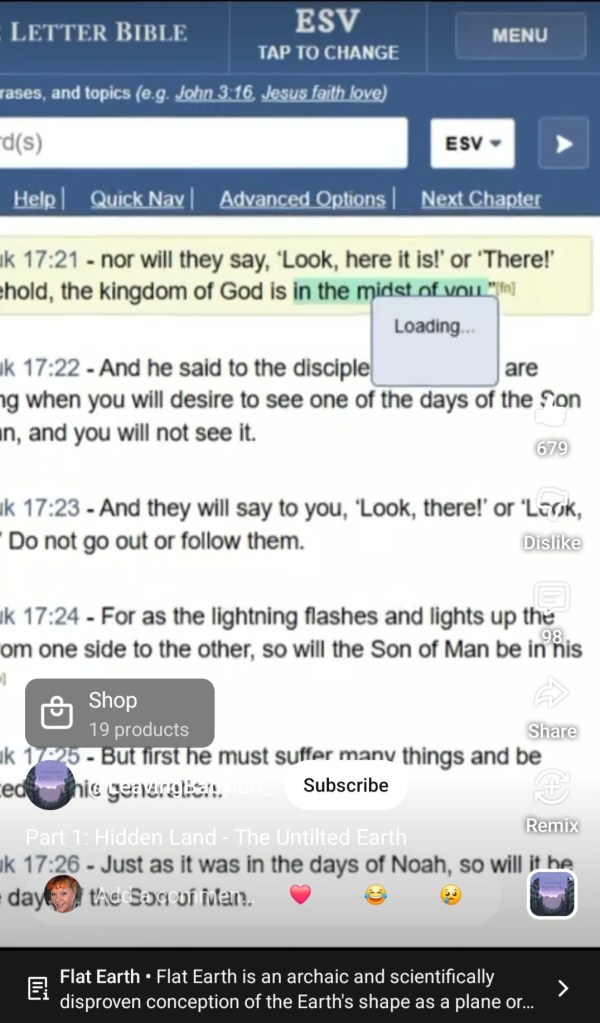
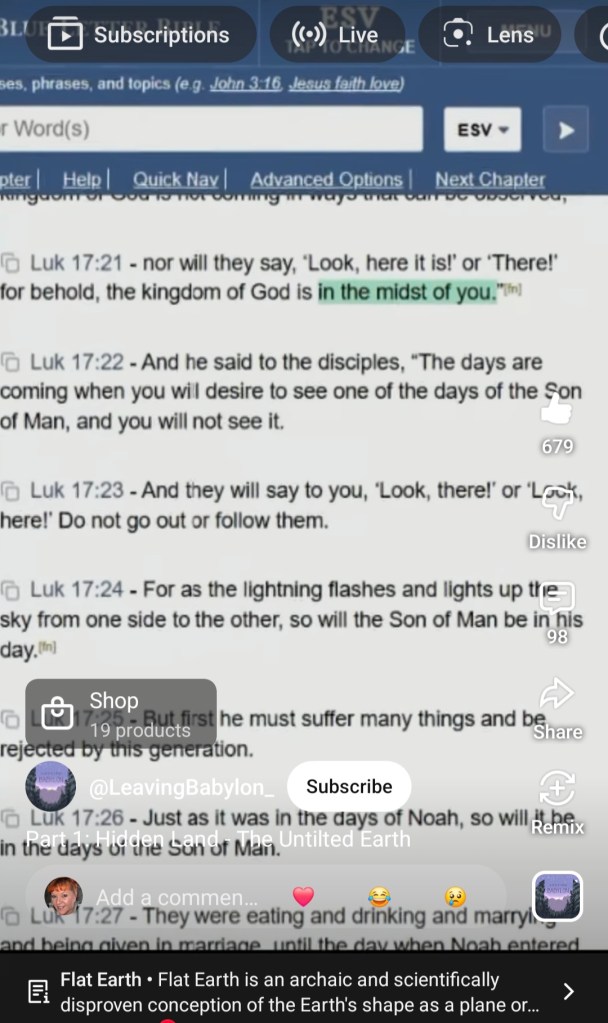
THE FIRST TRANSLATIONS INTO ENGLISH. Last night, all night these thoughts were in my mind as I slept. So, I must share it and leave it with the readers on what they are going to do with it. I do believe this is from the LORD Jesus Christ, to state it definitely is I will not as I can be wrong. So I am mot saying thus saith the LORD, only that In my spirit I am impressed to believe it is.
Tyndale 1534
Luke 17:21 Nether shall men saye: Loo here loo there. For beholde the kyngdome of God is with in you.
Coverdale 1535
Luke 17:21 nether shal it be sayde: lo, here or there is it. For beholde, ye kyngdome of God is inwarde in you.
Matthews 1537
Luke 17:21 Neyther shal men saye: Lo here, lo there. For beholde the kyngdom of God is within you.
Bishops 1568
Luke 17:21 Neither shall they say, lo here, or lo there: For beholde, the kyngdome of God is within you.
The Great Bible 1539
17:21 nether shal they saye. Lo here, Or lo there: For beholde the kyngdome of God is within you.
Geneva 1560
Luke 17:21
Neither shall men say, Loe here, or lo there: for behold, the kingdome of God is within you.
King James 1611
Luke
17:21 Neither shall they say, Loe here, or loe there: for behold, the kingdome of God is within you.
Literal Translations
~LITERAL TRANSLATIONS ~
Youngsters 1862
Luke
17:21 nor shall they say, Lo, here; or lo, there; for lo, the reign of God is within you.’
Smith 1876
Luke
17:21 Neither shall they say, Behold here or, behold there! for, behold, the kingdom of God is within you.
Webster 1833
Luke
17:21 Neither will they say, Lo here! or lo there! for behold, the kingdom of God is within you.
MODERN VERSIONS
NEW INTERNATIONAL VERSION. Luke 17:21nor will people say, ‘Here it is,’ or ‘There it is,’ because the kingdom of God is in your midst.”
NEW LIVING TRANSLATION. You won’t be able to say, ‘Here it is!’ or ‘It’s over there!’ For the Kingdom of God is already among you.”
ENGLISH STANDARD VERSION. nor will they say, ‘Look, here it is!’ or ‘There!’ for behold, the kingdom of God is in the midst of you.”
BEREAN STANDARD BIBLE. Nor will people say, ‘Look, here it is,’ or ‘There it is.’ For you see, the kingdom of God is in your midst.”
BEREAN LITERAL BIBLE. nor will they say, ‘Behold here,’ or ‘There.’ For behold, the kingdom of God is in your midst.”
NEW AMERICAN STANDARD Biblenor will they say, ‘Look, here it is!’ or, ‘There it is!’ For behold, the kingdom of God is in your midst.”
NASB 1995 nor will they say, ‘Look, here it is!’ or, ‘There it is!’ For behold, the kingdom of God is in your midst.”
NASB 1977. nor will they say, ‘Look, here it is!’ or, ‘There it is!’ For behold, the kingdom of God is in your midst.”
LEGACY STANDARD BIBLE. nor will they say, ‘Look, here!’ or, ‘There!’ For behold, the kingdom of God is in your midst.”
AMPLIFIED BIBLE. nor will people say, ‘Look! Here it is!’ or, ‘There it is!’ For the kingdom of God is among you [because of My presence].”
CHRISTIAN STANDARD BIBLE. no one will say, ‘See here! ’ or ‘There! ’ For you see, the kingdom of God is in your midst.”
HOLMAN CHRISTIAN STANDARD BIBLE. no one will say, ‘Look here!’ or ‘There!’ For you see, the kingdom of God is among you.”
CONTEMPORARY ENGLISH VERSION. There is no use saying, ‘Look! Here it is’ or ‘Look! There it is.’ God’s kingdom is here with you.”
ENGLISH REVISED VERSION. neither shall they say, Lo, here! or, There! for lo, the kingdom of God is within you.
INTERNATIONAL STANDARD VERSION. People won’t be saying, ‘Look! Here it is!’ or ‘There it is!’ because now the kingdom of God is among you.”
Difference Between Translation and Version
Version” refers to any different form or rendition of a text, while “translation” specifically means rendering a text from one language to another, often implying a direct, faithful transfer; in practice, especially for Bibles, “versions” (like KJV, NIV) are often translations with differing philosophies (literal vs. dynamic), but “version” can also mean a paraphrase or retelling, emphasizing interpretation over literal accuracy.
Translation
Definition: The process of converting words from a source language (e.g., Hebrew, Greek) into a target language (e.g., English).
Goal: To convey the meaning, tone, and context of the original text as accurately as possible.
Example: Tyndale’s work was the first English translation of the New Testament from original languages.
Version
Definition: A specific edition or rendering of a text, which can be a translation, a paraphrase, or an adaptation.
Goal: Can range from very literal (like NASB) to more readable/paraphrased (like NIV), or even a retelling for a specific audience.
Example: The King James Version (KJV) or the New International Version (NIV) are popular versions of the Bible, each with its own translation approach.
Key Differences
Scope: All translations are versions, but not all versions are pure translations; some are interpretations or paraphrases.
Philosophy: The term “version” often highlights the translator’s interpretation or chosen style (e.g., word-for-word vs. thought-for-thought) rather than just the language change.
Usage: In religious contexts, “version” is used to distinguish different Bibles, acknowledging that multiple faithful renderings are possible due to linguistic challenges.
Who influenced the majority of the modern Versions?
What Bible translation were influenced by Westcott and Hort?
Westcott and Hort’s 1881 Greek New Testament, which favored Alexandrian manuscripts like Codex Vaticanus and Sinaiticus over the Byzantine text, heavily influenced nearly all modern English translations. Major translations influenced by their text and methods include the RSV, NIV, NASB, ESV, NET, and the New World Translation.
Key Translations Influenced by Westcott and Hort
English Revised Version (RV) of 1881: Directly influenced as Westcott and Hort were on the revision committee.
Revised Standard Version (RSV)
New International Version (NIV)
New American Standard Bible (NASB)
English Standard Version (ESV)
NET Bible
New World Translation (NWT)
Other modern versions: Common English Version (CEV), Good News Bible (GNB), New Century Version.
Influence on Textual Criticism
Westcott and Hort’s 1881 text replaced the Textus Receptus (used for the KJV) as the standard for critical editions. Their approach, favoring the “oldest” manuscripts, laid the foundation for the United Bible Societies’ (UBS) Greek New Testament and Nestle-Aland editions, which are the basis for most modern Bible translations.
Where Wescot and Hort Godly men of Character?
The Founders of Psychical Research records the stated objective of the Cambridge Ghost Society:
“In 1851, was founded at Cambridge a Society to ‘conduct a serious and earnest inquiry into the nature of the phenomena vaguely called supernatural,’ and a number of distinguished persons became members.” (20)
The Ghost Society is also described in the biography of one of its founding members, The Life and Letters of Fenton John Anthony Hort, by Arthur Hort.
“Two other societies…were started…in both of which Hort seems to have been the moving spirit…the other called by its members ‘The Ghostly Guild.’ The object was to collect and classify authenticated instances of what are now called ‘psychical phenomena’…the ‘Bogie Club’ as scoffers called it, aroused a certain amount of derision, and even some alarm; it was apparently born too soon.” (21)
The Society for Psychical Research: An Outline of its History and the Life of Edward White Benson by his son, Arthur, present further documentation of the distinguished founders of the Cambridge Ghost Society:
“Among the numerous persons and groups who in the middle of the nineteenth century were making enquiries into psychical occurrences may be mentioned a society from which our own can claim direct descent. In the Life of Edward White Benson, Archbishop of Canterbury, by his son, A. C. Benson, will be found, under the year 1851-2, the following paragraph:
Among my father’s diversions at Cambridge was the foundation of a ‘Ghost Society,’ the forerunner of the Psychical Society [meaning the S.P.R.] for the investigation of the supernatural. Lightfoot, Westcott and Hort were among the members. He was then, as always, more interested in psychical phenomena than he cared to admit.’
“Lightfoot and Westcott both became bishops, and Hort Professor of Divinity. The S.P.R. has hardly lived up to the standard of ecclesiastical eminence set by the parent society.” (22)
Canon J.B. Lightfoot, Bishop B.F. Westcott, and Professor of Divinity F.J.A. Hort also served on the Revision Committee for the English Revised Version of 1881. Drs. Westcott and Hort produced a New Greek Text and created a new theory of textual criticism for this revision of the Authorized Version of 1611. Edward White Benson, who became Archbishop of Canterbury in 1883, married Mary Sidgwick. Edward and Mary became the parents of Robert Hugh Benson, who converted to Roman Catholicism during the Oxford Movement led by John Henry Newman. (23) Mary’s brother, Henry Sidgwick married Eleanor Balfour, the sister of Arthur Balfour, who became a future Prime Minister of England. Gauld reflects —
“To say that the Sidgwicks had friends in high places would be an enormous understatement. They were also, I should guess, among the most intellectual couples of the century.” (24)
Arthur Balfour’s brother, Gerald, was also the brother-in-law of Emily Lutyens, a disciple of Theosophist Annie Besant and foster-mother of Jiddu Krishnamurti, who was thought to be Lord Maitreya, the World Teacher of the new age.
“Lady Emily Lutyens, the wife of the architect, is interesting in this context. Before joining the Theosophical Society she had interested herself in state-regulated prostitution, and toyed with the notion of Women’s Suffrage. Her sister, Constance, went the whole way, was jailed and forcibly fed. Converted by Mrs. Besant, Emily became for ten years the devoted “foster-mother” and adherent of Krishnamurti. . . even among the highest reaches of society the crisis of consciousness made itself felt. The supernatural was no stranger to the family of Emily Lutyens.
“She herself had been born Emily Lytton, the granddaughter of the occultist Bulwer Lytton, and was the sister-in-law of Gerald Balfour, who with his brother Arthur became president of the Society for Psychical Research. The Balfours’ sister, Nora, married Henry Sidgwick, whose own sister, Mary, became the wife of Edward White Benson, and the mother of Robert Hugh. Within this family connection, it is quite natural to find at least one devoted Theosophist.” (25)
As an undergraduate at Cambridge, B.F. Westcott also founded the Hermes Club, which he named after the Graeco-Egyptian deity, Hermes Trismegistus. Subsequent Hermetic societies founded by other Spiritualists would become famous in England — one organized in 1884 by Anna Kingsford and Edward Maitland, which was in close contact with the Theosophical Society, (26) and The Order of the Golden Dawn founded by MacGregor Mathers and Wynn Westcott. James Webb has elucidated the meaning of Hermes:
In the history of the Secret Traditions the Hermetica became important because of the great value place on them in Renaissance Europe; in their context they are significant because they typify this magical attitude to life. The fact that Hermes is taken here as the founder of astrology, alchemy, or magic, the revealer of occult correspondences, is useful to emphasize that European attempts at practicing astrology, alchemy, or magic, often called the “Hermetic sciences,” have their origins in the same period of religious ferment as saw the flourishing of the Mysteries and the birth of Neo-Platonism… the philosophical position of the Hermetica, with its doctrine that matter is evil and to be escaped, can be paralleled by the Gnostics.” (27)
In her Theosophical Glossary, Madame H.P. Blavatsky also reported the extensive use of Hermetic doctrines in Gnostic writings:
“Hermetic. Any doctrine or writing connected with the esoteric teachings of Hermes . . . Though mostly considered as spurious, nevertheless the Hermetic writings were highly prized by St. Augustine, Lactantius, Cyril and others. In the words of Mr. J. Bonwick, ‘They are more or less touched up by the Platonic philosophers among the early Christians (such as Origin and Clemens Alexandrinus) who sought to substantiate their Christian arguments by appeals to these heathen and revered writings, though they could not resist the temptation of making them say a little too much.’ Though represented by some clever and interested writers as teaching pure monotheism, the Hermetic or Trismegistic books are, nevertheless, purely pantheistic . . . ” (28)
A contemporary of B.F. Westcott, Mme. Blavatsky classified Westcott with the Gnostic philosophers, even laughing him to scorn in her channeled work, Isis Unveiled, for his credulity of The Pastor of Hermas. It seems that Anglican scholars gave the weight of Scripture to apocryphal literature from the occult underground with which she was familiar:
“In their immoderate desire to find evidence for the authenticity of the New Testament, the best men, the most erudite scholars even among Protestant divines, but too often fall into deplorable traps. We cannot believe that such a learned commentator as Canon Westcott could have left himself in ignorance as to Talmudistic and purely kabalistic writings. How then is it that we find him quoting, with such serene assurance as presenting ‘striking analogies to the Gospel of St. John,’ passages from the work of The Pastor of Hermas, which are complete sentences from kabalistic literature?” (29)
Okay it would be unfair to show the character of two thst highly influenced modern Versions and not show a little of the character or those who truly translated the original into English, starting with the man that literally gave his very life to give us an English Bible.
William Tyndale Bible 1534
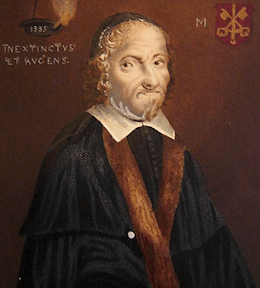
William Tyndale was the first man to ever print the New Testament in the English language. Tyndale also went on to be the first to translate much of the Old Testament from the original Hebrew into English, but he was executed in 1536 for the “crime” of printing the scriptures in English before he could personally complete the printing of an entire Bible. His friends Myles Coverdale, and John [Thomas Matthew] Rogers, managed to evade arrest and publish entire Bibles in the English language for the first time, and within one year of Tyndale’s death. These Bibles were primarily the work of William Tyndale.
Textus Receptus Bibles.
Coverdale Bible 1535
The Coverdale Bible, compiled by Myles Coverdale and published in 1535, was the first complete English translation of the Bible to contain both the Old and New Testament and translated from the original Hebrew and Greek. The later editions (folio and quarto) published in 1539 were the first complete Bibles printed in England. The 1539 folio edition carried the royal license and was, therefore, the first officially approved Bible translation in English.
Tyndale never had the satisfaction of completing his English Bible; but during his imprisonment, he may have learned that a complete translation, based largely upon his own, had actually been produced. The credit for this achievement, the first complete printed English Bible, is due to Miles Coverdale (1488-1569), afterward bishop of Exeter (1551-1553).
The details of its production are obscure. Coverdale met Tyndale in Hamburg, Germany in 1529, and is said to have assisted him in the translation of the Pentateuch. His own work was done under the patronage of Oliver Cromwell, who was anxious for the publication of an English Bible; and it was no doubt forwarded by the action of Convocation, which, under Archbishop Cranmer’s leading, had petitioned in 1534 for the undertaking of such a work.
Coverdale’s Bible was probably printed by Froschover in Zurich, Switzerland and was published at the end of 1535, with a dedication to Henry VIII. By this time, the conditions were more favorable to a Protestant Bible than they had been in 1525. Henry had finally broken with the Pope and had committed himself to the principle of an English Bible. Coverdale’s work was accordingly tolerated by authority, and when the second edition of it appeared in 1537 (printed by an English printer, Nycolson of Southwark), it bore on its title-page the words, “Set forth with the King’s most gracious license.” In licensing Coverdale’s translation, King Henry probably did not know how far he was sanctioning the work of Tyndale, which he had previously condemned.
In the New Testament, in particular, Tyndale’s version is the basis of Coverdale’s, and to a somewhat less extent this is also the case in the Pentateuch and Jonah; but Coverdale revised the work of his predecessor with the help of the Zurich German Bible of Zwingli and others (1524-1529), a Latin version by Pagninus, the Vulgate, and Luther. In his preface, he explicitly disclaims originality as a translator, and there is no sign that he made any noticeable use of the Greek and Hebrew; but he used the available Latin, German, and English versions with judgment. In the parts of the Old Testament which Tyndale had not published he appears to have translated mainly from the Zurich Bible. [Coverdale’s Bible of 1535 was reprinted by Bagster, 1838.]
In one respect Coverdale’s Bible was groundbreaking, namely, in the arrangement of the books of the. It is to Tyndale’s example, no doubt, that the action of Coverdale is due. His Bible is divided into six parts — (1) Pentateuch; (2) Joshua — Esther; (3) Job — “Solomon’s Balettes” (i.e. Canticles); (4) Prophets; (5) “Apocrypha, the books and treatises which among the fathers of old are not reckoned to be of like authority with the other books of the Bible, neither are they found in the canon of the Hebrew”; (6) the New Testament. This represents the view generally taken by the Reformers, both in Germany and in England, and so far as concerns the English Bible, Coverdale’s example was decisive.
Matthew’s Bible 1537. The Matthew Bible, also known as Matthew’s Version, was first published in 1537 by John Rogers, under the pseudonym “Thomas Matthew”. It combined the New Testament of William Tyndale, and as much of the Old Testament as he had been able to translate before being captured and put to death, with the translations of Myles Coverdale as to the balance of the Old Testament and the Apocrypha, except the Apocryphal Prayer of Manasses. It is thus a vital link in the main sequence of English Bible translations.
The Great Bible 1539
The Great Bible of 1539 was the first authorized edition of the Bible in English, authorized by King Henry VIII of England to be read aloud in the church services of the Church of England. The Great Bible was prepared by Myles Coverdale, working under commission of Thomas, Lord Cromwell, Secretary to Henry VIII and Vicar General. In 1538, Cromwell directed the clergy to provide “one book of the bible of the largest volume in English, and the same set up in some convenient place within the said church that ye have care of, whereas your parishioners may most commodiously resort to the same and read it.”
Bishops Bible 1568
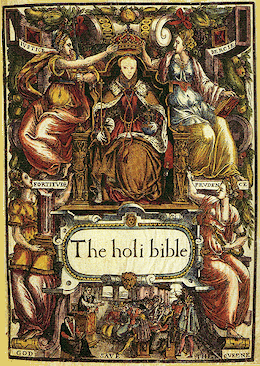
The Bishops’ Bible was produced under the authority of the established Church of England in 1568. It was substantially revised in 1572, and the 1602 edition was prescribed as the base text for the King James Bible completed in 1611. The thorough Calvinism of the Geneva Bible offended the Church of England, to which almost all of its bishops subscribed. They associated Calvinism with Presbyterianism, which sought to replace government of the church by bishops with government by lay elders. However, they were aware that the Great Bible of 1539 , which was the only version then legally authorized for use in Anglican worship, was severely deficient, in that much of the Old Testament and Apocrypha was translated from the Latin Vulgate, rather than from the original Hebrew, Aramaic and Greek. In an attempt to replace the objectionable Geneva translation, they circulated one of their own, which became known as the Bishops’ Bible.
Geneva Bible 1560/1599
The Geneva Bible is one of the most influential and historically significant translations of the Bible into English, preceding the King James translation by 51 years. It was the primary Bible of 16th century Protestantism and was the Bible used by William Shakespeare, Oliver Cromwell, John Knox, John Donne, and John Bunyan. The language of the Geneva Bible was more forceful and vigorous and because of this, most readers strongly preferred this version at the time.
The Geneva Bible was produced by a group of English scholars who, fleeing from the reign of Queen Mary, had found refuge in Switzerland. During the reign of Queen Mary, no Bibles were printed in England, the English Bible was no longer used in churches and English Bibles already in churches were removed and burned. Mary was determined to return Britain to Roman Catholicism.
The first English Protestant to die during Mary’s turbulent reign was John Rogers in 1555, who had been the editor of the Matthews Bible. At this time, hundreds of Protestants left England and headed for Geneva, a city which under the leadership of Calvin, had become the intellectual and spiritual capital of European Protestants.
One of these exiles was William Whittingham, a fellow of Christ Church at Oxford University, who had been a diplomat, a courtier, was much traveled and skilled in many languages including Greek and Hebrew. He eventually succeeded John Knox as the minister of the English congregation in Geneva. Whittingham went on to publish the 1560 Geneva Bible.
This version is significant because, it came with a variety of scriptural study guides and aids, which included verse citations that allow the reader to cross-reference one verse with numerous relevant verses in the rest of the Bible, introductions to each book of the Bible that acted to summarize all of the material that each book would cover, maps, tables, woodcut illustrations, indices, as well as other included features, all of which would eventually lead to the reputation of the Geneva Bible as history’s very first study Bible.
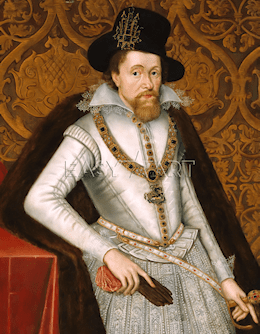
King James Bible 1611
The commissioning of the King James Bible took place at a conference at the Hampton Court Palace in London England in 1604. When King James came to the throne he wanted unity and stability in the church and state, but was well aware that the diversity of his constituents had to be considered. There were the Papists who longed for the English church to return to the Roman Catholic fold and the Latin Vulgate. There were Puritans, loyal to the crown but wanting even more distance from Rome. The Puritans used the Geneva Bible which contained footnotes that the king regarded as seditious. The Traditionalists made up of Bishops of the Anglican Church wanted to retain the Bishops Bible.
The king commissioned a new English translation to be made by over fifty scholars representing the Puritans and Traditionalists. They took into consideration: the Tyndale New Testament, the Matthews Bible, the Great Bible and the Geneva Bible. The great revision of the Bible had begun. From 1605 to 1606 the scholars engaged in private research. From 1607 to 1609 the work was assembled. In 1610 the work went to press, and in 1611 the first of the huge (16 inch tall) pulpit folios known today as “The 1611 King James Bible” came off the printing press.
Literal Translations. Young’s Literal Translation 1862. Young’s Literal Translation is a translation of the Bible into English, published in 1862. The translation was made by Robert Young, compiler of Young’s Analytical Concordance to the Bible and Concise Critical Comments on the New Testament. Young used the Textus Receptus and the Majority Text as the basis for his translation. He wrote in the preface to the first edition, “It has been no part of the Translator’s plan to attempt to form a New Hebrew or Greek Text–he has therefore somewhat rigidly adhered to the received ones.”
Julia E. Smith Translation 1876
The Julia Evelina Smith Parker Translation is considered the first complete translation of the Bible into English by a woman. The Bible was titled The Holy Bible: Containing the Old and New Testaments; Translated Literally from the Original Tongues, and was published in 1876.
Julia Smith, of Glastonbury, Connecticut had a working knowledge of Latin, Greek and Hebrew. Her father had been a Congregationalist minister before he became a lawyer. Having read the Bible in its original languages, she set about creating her own translation, which she completed in 1855, after a number of drafts. The work is a strictly literal rendering, always translating a Greek or Hebrew word with the same word wherever possible. Smith accomplished this work on her own in the span of eight years (1847 to 1855). She had sought out no help in the venture, even writing, “I do not see that anybody can know more about it than I do.” Smith’s insistence on complete literalness, plus an effort to translate each original word with the same English word, combined with an odd notion of Hebrew tenses (often translating the Hebrew imperfect tense with the English future) results in a translation that is mechanical and often nonsensical. However, such a translation if overly literal might be valuable to consult in checking the meaning of some individual verse. One notable feature of this translation was the prominent use of the Divine Name, Jehovah, throughout the Old Testament of this Bible version.
In 1876, at 84 years of age some 21 years after completing her work, she finally sought publication. The publication costs ($4,000) were personally funded by Julia and her sister Abby Smith. The 1,000 copies printed were offered for $2.50 each, but her household auction in 1884 sold about 50 remaining copies.
The translation fell into obscurity as it was for the most part too literal and lacked any flow. For example, Jer. 22:23 was given as follows: “Thou dwelling in Lebanon, building as nest in the cedars, how being compassionated in pangs coming to thee the pain as in her bringing forth.” However, the translation was the only Contemporary English translation out of the original languages available to English readers until the publication of The British Revised Version in 1881-1894.(The New testament was published in 1881, the Old in 1884, and the Apocrypha in 1894.) This makes it an invaluable Bible for its period.
Noah Webster’s Bible 1833
While Noah Webster, just a few years after producing his famous Dictionary of the English Language, produced his own modern translation of the English Bible in 1833; the public remained too loyal to the King James Version for Webster’s version to have much impact.
So, why is all this important and necessary? It is for multiple reasons. The Holy Scriptures are being attacked in the generation as never before. That old subtle whisper the serpent said to Eve is now happening again on a worldwide scale.
Genesis
| 3:1 | Now the serpent was more subtill then any beast of the fielde, which the Lord God had made: and he said to the woman, Yea, hath God in deede said, Ye shall not eate of euery tree of the garden? |
That tree we all are to eat from is the Tree of Life which is Jesus Christ and His Words He spoke and taught His Apostles to teach us so we can be saved through their word which is the words Jesus Christ taught. But now those very words are being brought into question and many are teaching they have been changed and no longer the true words of God. Yet, will go to the modern Versions that has changed the very written words into the thoughts of the person writing it!! You own opinions, ideas, and assumptions are placed into versions! Can God use modern Versions to save people? Yes He can absolutely and as they grow in faith He will reveal to them and urge them to read a translation and no longer man made and influenced Versions!
What’s the difference between version and translation? Versioning is indeed a form of creative writing, but it is not translation. To truly translate, one must know the language the work is written in and the culture that informs the work. There is team-translation, but this doesn’t seem to fall into that category.
Luke 17:21 in the new Versions influenced by Wescot and Hort says that the kingdome was in their midst, yet, He had stated it did not come with “observation “. The true translations say the kingdom is within them. Now I heard the argument by our sister in Christ that, that cannot be correct because he was speaking to the Pharisees and the those who did not believe Him. So, she teaches that it is in their midst pointing to the LORD Jesus Christ.
The verse before it says this, “And when hee was demaunded of the Pharises, when the kingdome of God shoulde come, he answered them, and said, The kingdome of God commeth not with obseruation” that is from the 1560 Geneva. The one she is quoting from says this, “Being asked by the Pharisees when the kingdom of God would come, he answered them, “The kingdom of God is not coming in ways that can be observed.” Yet then immediately says the kingdom of God is in their midst??? But it cant be observed? Is that not a complete contradiction?
Another reason why it is important is because it makes people begin to doubt what the Holy Scriptures teach and will bring despair and defeat upon those hearing this. By teaching, God purposedly let His Infallible Written Word become Fallible so people cannot know the Truth is not the Creator of Heaven and Earth and all there is within, to me at least.
Charles H. Spurgeon
Charles H. Spurgeon preached about Bible correctors in a sermon entitled, “The Greatest Fight in the World.” He said:
“We have given up the Pope, for he has blundered often and terribly; but we shall not set up instead of him a horde of little popelings fresh from college. Are these correctors of Scripture infallible? Are we now to believe that infallibility is with learned men? Now, Farmer Smith, when you have read your Bible, and have enjoyed its precious promises, you will have, to-morrow morning, to go down the street to ask the scholarly man at the parsonage whether this portion of the Scripture belongs to the inspired part of the Word, or whether it is of dubious authority. We shall gradually be so be doubted and be criticized, that only a few of the most profound will know what is Bible, and what is not, and they will dictate to all the rest of us. I have no more faith in their mercy than in their accuracy: they will rob us of all that we hold most dear, and glory in the cruel deed. This same reign of terror we shall not endure, for we still believe that God revealeth himself rather to babes than to the wise and prudent, and we are fully assured that our own old English version of the Scriptures is sufficient for plain men for all purposes of life, salvation, and godliness. We do not despise learning, but we will never say of culture or criticism, “These be thy gods, O Israel!”
Spurgeon had it right. Textual criticism by the “experts” is a horde of little popelings who by their assumed infallibility have the gall to tell us what is God’s Word and what is not. Such is the tyranny of the experts.
(Spurgeon on Westcott and Hort) “With those who treat the Bible as waste paper, and regard the death of Christ as no substitution, we have no desire for fellowship. After the gospel has been found effectual in the eternal salvation of untold multitudes, it seems rather late in the day to alter it; and , since it is the revelation of the all-wise and unchanging God, it appears somewhat audacious to attempt its improvement. When we call up before our mind’s eye the gentlemen who have set themselves this presumptuous task….. Their gigantic intellects are to hatch out the meanings of the Infinite. Hitherto they have not hatched out much worth reading. Their chickens are so much of the Roman breed, that we sometimes seriously suspect that, after all, Jesuitical craft may be at the bottom of this “modern thought”. — Charles Spurgeon
In 1825, the Jesuits famous meeting in Chieri, Italy declared their attention to seize control of the Bible as part of their centuries old plan to bring all the world under the power of Rome.
1859 Cardinal Manning said:
“England is the head of Protestantism, the centre of its movements and the stronghold of its power. Weakened in England, it is paralysed everywhere. Conquered in England, it is conquered throughout the world. Once overthrown here, all else is but a warfare of detail.” — (“Jesuits Plots from Elizabethan to Modern Times,” by Albert Close, Pg. 18)
To accomplish their aims the Jesuits deemed it necessary to take control of the Bible! The Jesuits had this to say about the Bible:
“Then the Bible, that serpent which, with head erect and eyes flashing fire threatens us with venom shall be changed again into a rod, as soon as we are able to seize it. Oh then, mysterious rod! We will not again suffer thee to escape from our hands. For you know too well, that for three centuries past, this cruel asp has left us no repose. You well know with what folds it entwines us, and with what fangs it gnaws us…” — (The Jesuit Conspiracy by Jacopo Leone, Pg. 98).
Speaking of the Bible this Jesuit priest had this to say, “If I may tell you openly what I think of this book, it is not at all for us, it is against us. I do not wonder at the invincible obstinacy it engenders in all those who regard its verses as inspired. In the simplicity of youth, I fully expected on opening the New Testament to find there, the authority of a superior chief in the Church… the worship of the Virgin… the mass… purgatory… relics … but in every page, I found my expectations disappointed. At last, after having read, at least six times over, that little book I was forced to acknowledge to myself that it actually sets forth a system of religion, altogether different…” (The Jesuit Conspiracy by Jacopo Leone, Pg. 99).
One of the major ways the Jesuits started to do this was by infiltrating Protestant Churches and Universities. In 1833 they started this; one way they did was by the “Oxford Movement” in England.
“In England, there are a greater number of Jesuits then in Italy… there are Jesuits in all classes of society; in Parliament; among English clergy, among the Protestant laity, even in the higher stations. I could not comprehend how a Jesuit could be a Protestant or how a Protestant…could be a Jesuit but my Confessor silenced my scruples by telling me that St. Paul became as a Jew that he might save the Jews… it was no wonder, therefore, if a Jesuit should feign himself a Protestant for the conversion of Protestants.” (The Secret History of the Oxford Movement by Walter Walsh Pg. 33)
BUT WHAT ABOUT THE BELIEFS OF WESTCOTT AND HORT???
In 1896, a collection of Hort’s letters was published by his son in two volumes. The book entitled “Life and Letters of Fenton John Anthony Hort” by his son Arthur Fenton Hort.
In Vol. 1 on page 76 we read:
“The pure Romish view seems to me nearer, and more likely to lead to, the truth than the Evangelical;”
On page 148, Hort said:
“…the ordinary confused evangelical notions, tho’ I would on no account alter the prayer book of catechism to make them more palatable to them.”
On page 400, Hort admits that:
“The positive doctrines even of the evangelicals seem to me perverted rather than untrue. There are, I fear, still serious differences between us on the subject of authority, and especially the authority of the Bible,”
On page 445, Hort says:
“I have a sort of craving that our text should be cast upon the world before we deal with matters likely to brand us with suspicion. I mean, a text, issued by men already known for what will undoubtedly be treated as dangerous heresey, will have great difficulties in finding its way to regions which it might otherwise hope to reach, and whence it would not be easily banished by subsequent alarms.”
Hort shows his hatred for the TRUE Greek Text on page 211, were he states:
“I had no idea till last few weeks of the importance of texts, having read so little Greek Testament, and dragged on with the villainous Textus Receptus. Westcott recommented me to get Bagster’s Critical, which has Scholz’s Text, and is most convenient in small quarto, with parallel Greek and English, and a wide margin on purpose for notes. This pleased me much; so many little alterations on good MS. authority made things clear not in a vulgar, notional way, but by giving a deeper and fuller meaning. But after all Scholz is very capricious and sparing in introducing good readings; and Tischendorf I find a great acquisition, above all, because he gives various readings at the bottom of his page, and his prolegomena are invaluable. Think of that vile Textus Receptus leaning entirely on late MSS; it is a blessing there are such early ones…”
In a letter to Westcott, Hort says on Page 430,
“Certainly nothing can be more unscriptural than the modern limiting of Christ’s bearing our sins and suffering to His death; but indeed that is only one aspect of an almost universal heresy.”
On page 120, Hort declares:
“The fact is, I do not see how God’s justice can be satisfied without every man’s suffering in his own person the full penalty for his sins. I know that it can, for if it could not in the case of some at least, the whole Bible would be a lie; but if in the case of some, why not in the case of all?”
Hort clearly did not believe that the death of Jesus on the cross was not enough to pay for his sins!!!
What about WESTCOTT, what did he believe???
In 1903, Westcott’s son “Arthur Westcott” published his fathers letters in a two volume book entitled, “Life and Letters of Brooke Foss Westcott.”
On page
He then went on to say on that same page:
“But pray think how utterly ignorant and prejudiced even well-informed men are on the text of the New Testament.”
On page 52, Westcott said:
“I never read an account of a miracle but I seem instinctively to feel its improbability, and discover some want of evidence in the account of it.”
In volume 2, on page 49 Westcott gives his view on Heaven, he writes:
“…it saves us from the error of connecting the presence of Christ’s glorified humanity with place: ‘heaven is a state and not a place.’ I cannot therefore but think that you should require the most exact rending of the whole.”
On page 394, Westcott states:
“If Tennyson’s idea of heaven was true, that ‘heaven is the ministry of the soul to soul,’ we may reasonable hope, by patient, resolute, faithful, united endeavour, to find heaven about us here, the glory of our earthly life.”
Westcott shows his love for ROMAN CATHOLICISM on page 81, when he writes:
“After leaving the monastery we shaped our course to a little oratory which we discovered on the summit of neighbouring hill, and by a little scrambling we reached it. Fortunately we found the door open. It is very small, with one kneeling–place; and behind a screen was a “Pietà” the size of life (i.e. a virgin and dead christ). The sculpture was painted, and such a group in such a place and at such a time was deeply impressive. I could not help thinking on the fallen grandeur of the Romish Church, on her zeal even in error, on her earnestness and self-devotion, which we might nobler views and a purer end, strive to imitate. Had I been alone I could have knelt there for hours.”
It is truly sad that a intelligent man like Westcott could not bring him self to believe in Heaven or miracles!!
https://www.jesus-is-savior.com/Bible/is_codex_sinaiticus_the_oldest_manuscript.htm

 Watchmen On The Pod