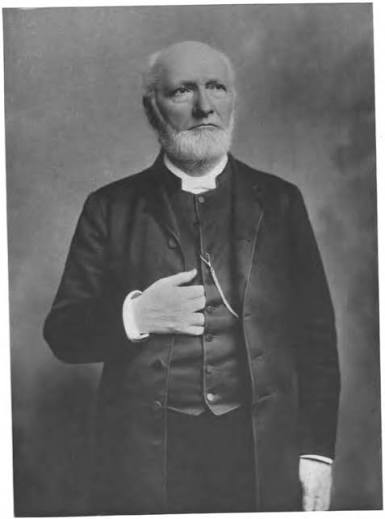
The historian and theologian Philip Schaff was a professional acquaintance and collaborator of Brooke Foss Westcott and Fenton John Anthony Hort, but there is no evidence that he was a freemason.
Philip Schaff and Westcott & Hort
Philip Schaff, a prominent Swiss-born, German-educated Protestant scholar who spent most of his career in the United States, was the president of the American Committee of Revisers of the Authorized Version of the Bible (the RV, which eventually led to the American Standard Version, ASV).
Westcott and Hort were influential members of the English New Testament Revision Committee, and their work, particularly their Greek New Testament text, heavily influenced the Revised Version. The American committee, led by Schaff, collaborated closely with the British committee, meaning Schaff worked with Westcott and Hort through the revision process, which concluded in 1885.
Freemasonry Claims
Claims of Schaff being a freemason are largely found in sources that also criticize Westcott and Hort for their work on biblical texts and their alleged involvement in “spiritualism” or secret societies like the “Ghost Society”. One source mentions a potential masonic hand signal in a portrait of Schaff as “evidence”.
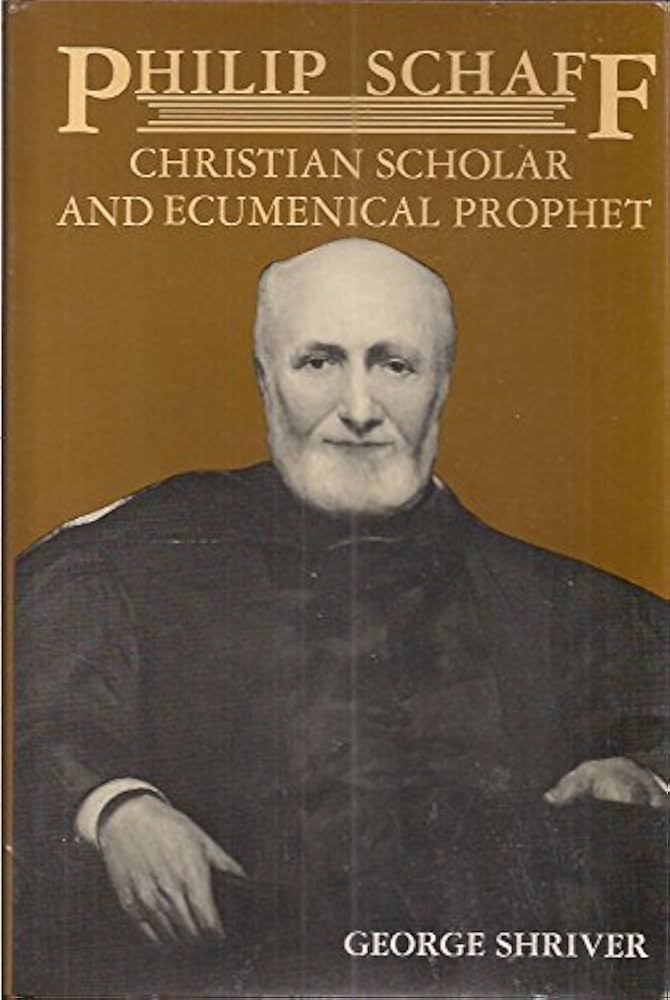
However, mainstream, authoritative biographical sources on Schaff do not mention any association with Freemasonry. In fact, one source notes that a different prominent Presbyterian of the era renounced all connection with the order and advised his sons against joining, which was a common stance among many conservative Protestants at the time. Philip Schaff’s life and work were centered on ecumenism, church history, and biblical scholarship within established Christian denominations.
Philip Schaff and Edward Gibbon did not know each other personally, as they lived in different centuries.
Edward Gibbon (1737-1794) was an influential English historian best known for his work The History of the Decline and Fall of the Roman Empire.
Philip Schaff (1819-1893) was a prominent German-American theologian and church historian, whose major work was the multi-volume History of the Christian Church.
Schaff was familiar with Gibbon’s work and cited it, though he often critiqued Gibbon’s skeptical perspective on Christianity’s role in the fall of the Roman Empire. Schaff and other later historians debated and revised Gibbon’s interpretations, particularly the argument that Christianity contributed to the Empire’s decline by undermining Roman civic virtue. Schaff’s work is considered a response to, and revision of, earlier historical narratives, including those by skeptics like Gibbon.
Yes, Philip Schaff was involved with Bible societies, as he was the first president of the American Bible Revision Committee, which he organized in 1871 to prepare the American version of the Revised Bible. While not a direct member of a specific “Bible Society” in the same way as some other organizations, his leadership in the American Bible Revision Committee shows his deep involvement with the work of providing the scriptures to the public.
American Bible Revision Committee: Schaff organized this committee in 1871 at the request of the British Committee, with the goal of preparing the American version of the Revised Bible. He served as its first president.
Other roles: He was a prolific writer, editor, and church historian who was also a founding member of other organizations like the Society of Biblical Literature and Exegesis and the American Society of Church History.
Yup y’all better not take his word as truth…only the True Holy Scriptures! As I have said before I say again the first 7 true translations of Textus Receptus the Holy Scriptures into English can be trusted starting with William Tyndale ending with the 1611 AKJB

 Watchmen On The Pod